

AI can influence whether a payment succeeds, how suspicious activity is investigated and how quickly a customer receives help. The useful question for Fintechzoom.com readers is what those systems actually improve, and what happens when they fail.
This TechHBX guide examines company announcements and published research to explain practical changes in payments, fraud prevention and customer service. The examples show why convenience, measurable results and human oversight belong in the same conversation.
Not every automated feature uses AI. A scheduled transfer can follow fixed instructions, while a model evaluates patterns or generates responses. Ask what the system may decide, which information it uses and how errors are corrected.
- AI Agents Can Pay, but Permission Comes First
- Fraud Detection Improves When Results Are Measured Properly
- Customer Service: Volume Is Just Half the Picture
- Fintechzoom.com Markets: Follow the Evidence Behind AI Headlines
- Lending, Privacy and Accountability Still Need Attention
- Practical Checks Before You Trust Financial AI
- Frequently Asked Questions
- Conclusion: Demand Control Alongside Convenience
AI Agents Can Pay, but Permission Comes First
Agentic AI can complete tasks through connected tools. In payments, that makes authorization as important as the quality of an answer.
Mastercard’s Agent Pay for Machines demonstration shows an agent purchasing research and campaign images within an approved budget. Its early access infrastructure supports credentialed participants and defined permissions.
Visa’s Intelligent Commerce Connect similarly describes tokenization, authentication and spending controls for agent purchases. Availability depends on the provider and implementation.
Before authorizing an agent, check spending limits, merchant restrictions, approval requirements and the process for disputing an unwanted purchase. A budget is useful only when the system enforces it.
Imagine authorizing software purchases for a small shop. Specify the maximum total, approved suppliers and whether renewals require fresh consent. One successful transaction does not justify permanent account access or an open subscription. Review permissions whenever the task, provider or approved spending budget changes.
Fraud Detection Improves When Results Are Measured Properly
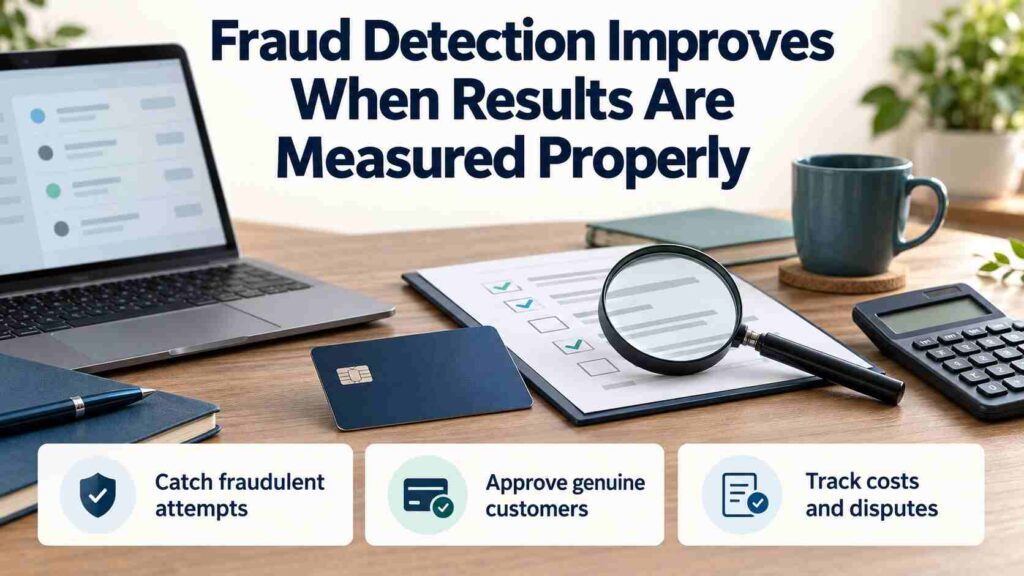
Stripe reported that its payments foundation model increased detection of a particular category of card-testing attacks against large businesses from 59% to 97%. This was a defined example, not proof that every merchant catches 97% of fraud.
For a business owner, the next questions concern false declines, chargebacks and operating costs. Blocking more suspicious transactions helps only if legitimate customers can still pay.
Ask your provider which protections are active, which cost extra and whether you can review decisions. Compare results over consistent periods before changing settings.
Customer Service: Volume Is Just Half the Picture
Bank of America reported that Erica exceeded 3.2 billion cumulative client interactions. That demonstrates scale, but interaction counts alone cannot establish how well every problem was resolved.
Klarna’s early AI assistant announcement reported two-thirds of customer service chats handled in its first month, with resolution times below two minutes compared with eleven previously. These were company-reported outcomes.
Useful support measures include lasting resolutions, repeat contacts and the time complex cases take to reach a specialist. A chatbot ending a conversation does not necessarily mean the underlying account problem has been fixed.
Reported Results and Their Limits
| Company | Published example | What readers should examine |
|---|---|---|
| Mastercard | Agent purchases within an approved budget | Permissions and dispute handling |
| Stripe | Selected attack detection rose from 59% to 97% | False declines and measurement scope |
| Bank of America | Erica exceeded 3.2 billion interactions | Resolution quality and escalation |
| Klarna | Two-thirds of chats handled initially | Satisfaction and repeat contacts |
These examples summarize dated company announcements, rather than current benchmarks. Their different populations and measurement methods prevent direct comparisons between providers.
A customer disputing a missing refund needs an accurate resolution, not simply a quick response. Check whether the assistant can transfer the conversation and its history to a person.
Fintechzoom.com Markets: Follow the Evidence Behind AI Headlines
AI announcements can attract attention without establishing stronger profits. Compare claimed savings with operating margins, implementation costs, complaints and disclosed losses. A demonstration establishes a capability under stated conditions; investors still need evidence that adoption produces sustainable business results.
Stocks, Nasdaq and Nikkei
For fintechzoom.com nasdaq commentary, identify the exact index. Nasdaq is also an exchange; a listing does not automatically establish Nasdaq-100 membership. Apply the same benchmark check to fintechzoom.com sp500 coverage.
When examining fintechzoom.com nikkei 225 updates, remember that Japan’s benchmark is price weighted. Constituent influence therefore differs from a simple equal-weighted average. Verify the methodology through Nikkei’s official overview.
Forex, Bonds and Metals

With fintechzoom.com forex market figures, verify the currency pair and quote time. For fintechzoom.com bonds, distinguish price from yield and identify maturity.
When comparing fintechzoom.com nickel and fintechzoom.com platinum quotations, match currency, units and contract dates. An AI summary cannot make mismatched figures comparable.
Fintechzoom.com Crypto: Separate Automation From Ownership
Fintechzoom crypto readers should distinguish an automated trading strategy from the rights attached to an asset. With fintechzoom.com bitcoin commentary, verify network data and exchange information independently.
Our crypto market cap guide explains why supply, valuation and liquidity require separate checks. Faster analysis does not eliminate custody risks or guarantee an executable sale.
Lending, Privacy and Accountability Still Need Attention
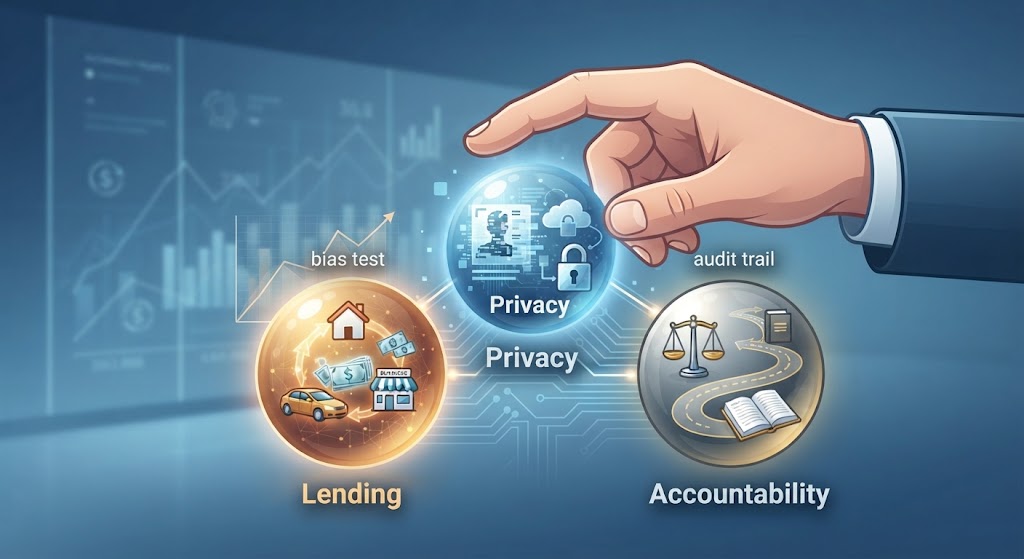
The European Commission’s AI Act guidance identifies certain creditworthiness uses as high risk. Classification, obligations and implementation dates depend on the application and applicable rules.
Cambridge researchers also found uneven AI adoption across financial firms and regulatory authorities. Adoption figures measure reported use, not necessarily effective governance.
Ask how a provider tests decisions for unfair outcomes, protects personal information and handles appeals. Data quality matters too: our web scraping explainer shows how automated collection works. Collected information still needs validation and appropriate permission for reuse.
Practical Checks Before You Trust Financial AI
- Turn on relevant account alerts and monitor unusual activity immediately.
- Set transaction limits before connecting an agent to payments.
- Verify urgent bank messages through a contact channel you already trust.
- Check model claims against original company disclosures.
- Keep records and learn how to reach human support.
For businesses, begin with one measurable problem, such as reducing fraudulent checkout attempts. Define success before deployment, monitor unintended consequences and retain a way to pause automation.
Keep approval receipts and note which settings were enabled. If something goes wrong, those records help you explain the problem and request a review through the provider’s process.
Frequently Asked Questions
What Is Agentic AI in Finance?
It is software that can perform connected tasks, potentially including payments, within permissions and controls set by a user or organization.
Does AI Make Banking Safer?
It can improve specific fraud checks. Effectiveness depends on implementation, data quality and monitoring; faster automation can also amplify mistakes.
Will AI Replace Every Customer Service Employee?
Company examples demonstrate automation at scale, but they do not establish that every dispute or vulnerable customer can be served effectively without people.
Can AI Predict Profitable Investments?
No reliable guarantee follows from using AI. Evaluate assumptions, costs, data quality and potential losses rather than treating a confident forecast as evidence.
Is fintechzoom.io nasdaq the Same Source?
Do not assume similar names mean shared ownership or identical data. If you searched fintechzoom .com, check the actual domain and underlying provider.
Conclusion: Demand Control Alongside Convenience
AI is changing financial services through delegated payments, fraud detection and automated support. Fintechzoom.com readers can benefit from understanding those developments while checking what each reported result actually measures. Set clear limits, examine original evidence and preserve access to human help. The strongest next step is practical: review one financial tool you already use and confirm who remains responsible when its automated decisions go wrong.

One thought on “Fintechzoom.com: How AI Is Reshaping Fintech and Your Money”