
Posted in

Link Verification Code Scam: How It Works and How to Stop It

Link Verification Code

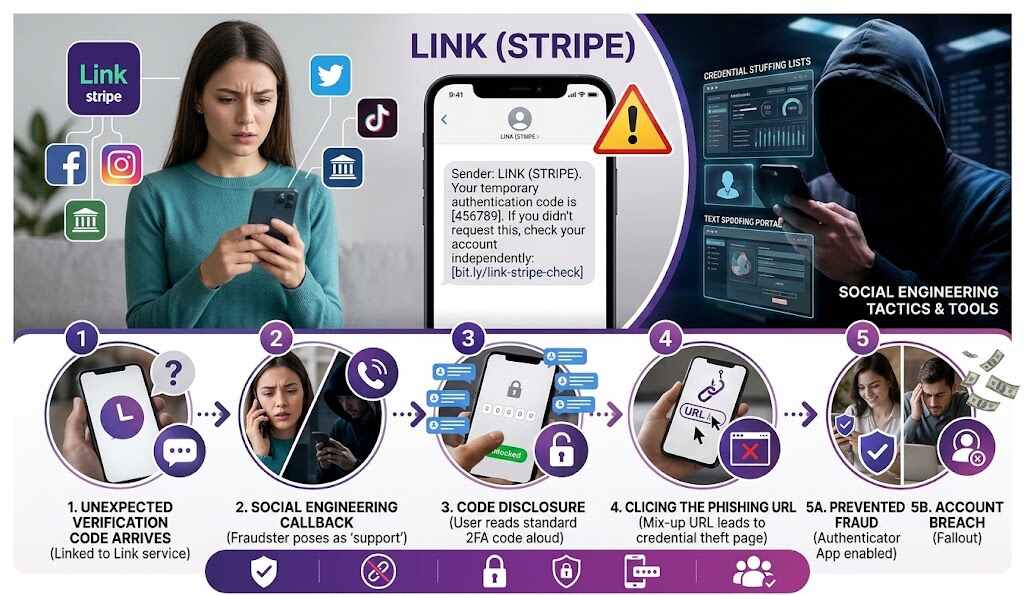
Link verification code text messages can be genuine, yet the authentication process behind them is a target for scammers. An unexpected message does not automatically mean someone has stolen your money. The greater danger starts when someone persuades you to disclose the code or enter it somewhere you did not independently choose.⁠⁠

That distinction matters when your phone buzzes during an ordinary day. You need a calm decision, not another alarming headline: identify the service, check what prompted the message, and keep control of the next step.

What Is a Link Verification Code?

For anyone searching “what is link verification code,” Link is Stripe’s accelerated checkout service, not a generic name for every security text. Its temporary passcodes help authenticate customers accessing saved payment information. Stripe’s documentation says returning customers can authenticate through SMS or email before their saved details load.⁠⁠

Link’s support guidance identifies several explanations for unexpected messages: recognition on a previously used device, or someone entering your phone number mistakenly. You might also have saved payment details during an earlier purchase without remembering Link’s name. Receiving a code alone cannot distinguish an innocent mistake from an attempted intrusion.⁠⁠

The Trap: A Real Message, a False Explanation
The Trap: A Real Message, a False Explanation

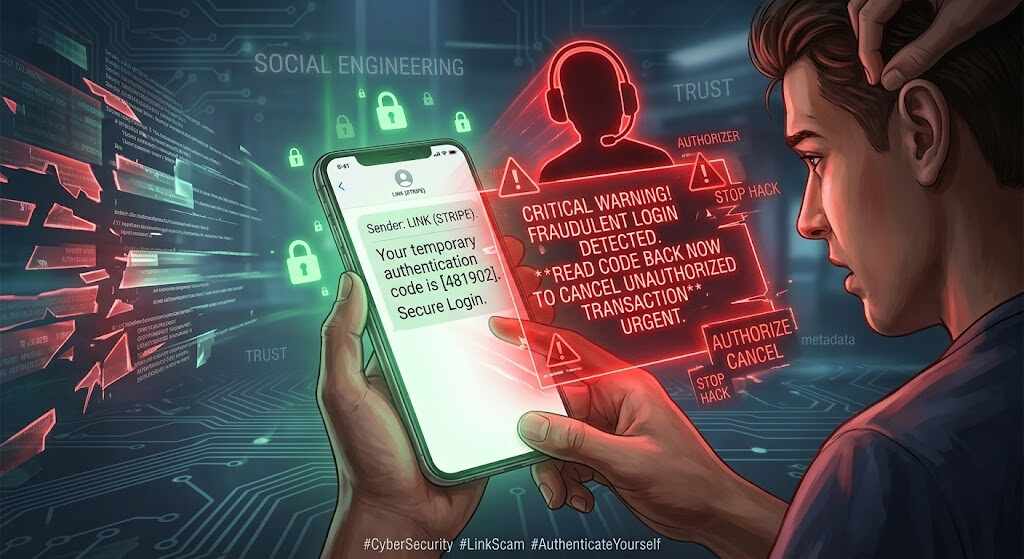
Verification-code scams don’t need to crack encryption—they exploit trust to steal the very codes designed to keep attackers out. A criminal initiates an authentication process, then contacts the recipient with a convincing story. The FTC describes impersonators claiming there is an account problem before asking for the verification code needed to access it.⁠⁠

Consider this illustrative scenario: a caller claims an unauthorized purchase is pending and asks you to read back a code to “cancel” it. You believe you are stopping fraud; the caller wants you to approve their access. It’s an example, not an actual Link customer experience.

The analytical dividing line is simple: authenticating yourself is different from authenticating somebody else’s session.

Customer Experiences: Confusion Is Not Proof

In a public Reddit discussion, one person reported repeated Link codes despite saying they had never used the service. Others described similar interruptions. These are self-reported experiences, not independently verified breaches, and they do not establish who requested the messages.⁠⁠

For readers asking “what is a link verification code,” those accounts reveal a genuine usability problem: unfamiliar branding makes routine security messages frightening. They do not justify claiming that Link itself is fraudulent.

The broader stakes are substantial. The FTC’s 2026 reporting puts reported impersonation losses at $3.5 billion for 2025. That total covers many schemes, not Link specifically.⁠⁠

Read the Situation, Not Just the Sender

Use this checklist when a link verification code text arrives. It combines Link’s explanations with the FTC’s advice on suspicious requests.⁠⁠⁠

SituationPossible meaningSafest response
You initiated checkoutExpected authenticationUse only the checkout you opened
Unexpected code, no follow-upMistake or unwanted requestIgnore code; inspect account independently
Someone demands the codeSocial engineering warningEnd contact; reach support independently
Unrecognized purchase appearsPossible financial fraudContact your card issuer promptly

Stop the Scam Without Locking Yourself Out
Link Verification Code Scam: How It Works and How to Stop It
Link verification code text messages can be genuine, yet the authentication process behind them is a target for scammers. An unexpected message does not automatically mean someone has stolen your money. The greater danger starts when someone persuades you to disclose the code or enter it somewhere you did not independently choose.⁠

⁠

That distinction matters when your phone buzzes during an ordinary day. You need a calm decision, not another alarming headline: identify the service, check what prompted the message, and keep control of the next step.

What Is a Link Verification Code?
For anyone searching “what is link verification code,” Link is Stripe’s accelerated checkout service, not a generic name for every security text. Its temporary passcodes help authenticate customers accessing saved payment information. Stripe’s documentation says returning customers can authenticate through SMS or email before their saved details load.⁠

⁠

Link’s support guidance identifies several explanations for unexpected messages: recognition on a previously used device, or someone entering your phone number mistakenly. You might also have saved payment details during an earlier purchase without remembering Link’s name. Receiving a code alone cannot distinguish an innocent mistake from an attempted intrusion.⁠

⁠

The Trap: A Real Message, a False Explanation
Verification scams exploit trust rather than necessarily breaking encryption. A criminal initiates an authentication process, then contacts the recipient with a convincing story. The FTC describes impersonators claiming there is an account problem before asking for the verification code needed to access it.⁠

⁠

Consider this illustrative scenario: a caller claims an unauthorized purchase is pending and asks you to read back a code to “cancel” it. You believe you are stopping fraud; the caller wants you to approve their access. This is an example, not a verified Link customer incident.

The analytical dividing line is simple: authenticating yourself is different from authenticating somebody else’s session.

Customer Experiences: Confusion Is Not Proof
In a public Reddit discussion, one person reported repeated Link codes despite saying they had never used the service. Others described similar interruptions. These are self-reported experiences, not independently verified breaches, and they do not establish who requested the messages.⁠

⁠

For readers asking “what is a link verification code,” those accounts reveal a genuine usability problem: unfamiliar branding makes routine security messages frightening. They do not justify claiming that Link itself is fraudulent.

The broader stakes are substantial. The FTC’s 2026 reporting puts reported impersonation losses at $3.5 billion for 2025. That total covers many schemes, not Link specifically.⁠

⁠

Read the Situation, Not Just the Sender
Use this checklist when a link verification code text arrives. It combines Link’s explanations with the FTC’s advice on suspicious requests.⁠

⁠⁠

⁠

Situation	Possible meaning	Safest response
You initiated checkout	Expected authentication	Use only the checkout you opened
Unexpected code, no follow-up	Mistake or unwanted request	Ignore code; inspect account independently
Someone demands the code	Social engineering warning	End contact; reach support independently
Unrecognized purchase appears	Possible financial fraud	Contact your card issuer promptly
Stop the Scam Without Locking Yourself Out
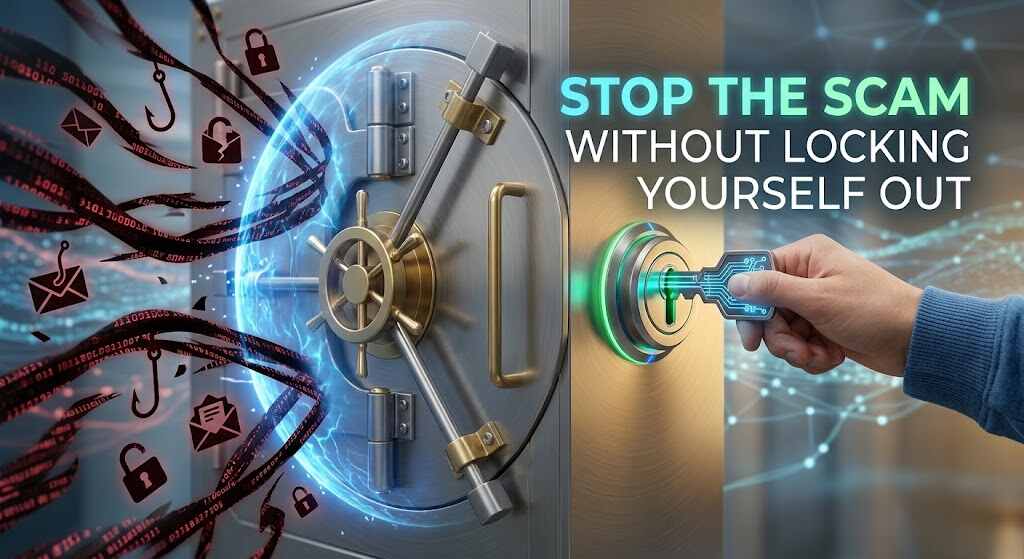
An answer to “what is link verification code” cannot certify a particular sender. Open Link by typing link.com into your browser yourself, review purchase activity, and sign out of other devices if appropriate. Never use contact details supplied by an unsolicited caller.⁠

⁠⁠

⁠

To reduce unwanted legitimate messages, consult Link’s official SMS management guidance. Opting out disables its one-click checkout functionality; it is not a remedy for an account already accessed by someone else.⁠

⁠

Link’s own guidance references an opt-out link delivered by SMS, so a link alone does not prove fraud. If its destination is uncertain, ask support through the official website instead.⁠

⁠ Preserve screenshots before blocking suspicious contacts. If you typed a password into a fraudulent page, change it from a trusted device, including anywhere you reused it, and secure the connected email account immediately.⁠

⁠

Protect the email account connected to your payments with a unique password and two-factor authentication. The FTC recommends an authenticator app or security key over SMS when available. Codes from authenticator apps still must not be shared.⁠

⁠

Five FAQs
What is a link verification code used for?
It authenticates access to Stripe’s Link checkout service. It is not a receipt, payment confirmation, or permission to share your credentials.⁠

⁠

Why did I receive a link verification code text unexpectedly?
A mistaken number or previously used device can explain it. Check independently rather than assuming either harmlessness or theft.⁠

⁠

What is link verification code fraud?
It means deception aimed at obtaining or misusing a verification code. Similar Google Voice scams exist, but Google Voice and Stripe Link are different services.⁠

⁠

Can a genuine SMS still accompany a scam?
Yes. A real service can send the code while an impersonator supplies the fraudulent explanation for why you should disclose it.⁠

⁠

What if I already shared the code?
Contact the affected service immediately, review activity, and alert your bank about unauthorized charges. Preserve messages and report suspected fraud through ReportFraud.ftc.gov in the United States.⁠

⁠

Conclusion: Keep the Decision Yours
The strongest defense is not recognizing every scam script. It is refusing to let another person control your authentication. Treat unexpected codes as a reason to check independently, not panic. Verify through channels you choose, disclose nothing to unsolicited contacts, and act quickly if access or money is at risk. A few deliberate seconds can interrupt a fraudster’s carefully manufactured urgency.

An answer to “what is link verification code” cannot certify a particular sender. Open Link by typing link.com into your browser yourself, review purchase activity, and sign out of other devices if appropriate. Never make use of any information from any soliciting caller.

To reduce unwanted legitimate messages, consult Link’s official SMS management guidance. Opting out disables its one-click checkout functionality; it is not a remedy for an account already accessed by someone else.⁠⁠

Link’s own guidance references an opt-out link delivered by SMS, so a link alone does not prove fraud. In case the destination isn’t clear, seek assistance via the official site instead. Preserve screenshots before blocking suspicious contacts. If you typed a password into a fraudulent page, change it from a trusted device, including anywhere you reused it, and secure the connected email account immediately.⁠⁠

Lock down the email account tied to your payments: use a strong, unique password and turn on two-factor authentication. The FTC recommends an authenticator app or security key over SMS when available. Codes from authenticator apps still must not be shared.⁠⁠

Five FAQs

What is a link verification code used for?

It authenticates access to Stripe’s Link checkout service. It is not a receipt, payment confirmation, or permission to share your credentials.⁠⁠

Why did I receive a link verification code text unexpectedly?

A mistaken number or previously used device can explain it. Check independently rather than assuming either harmlessness or theft.⁠⁠

What is link verification code fraud?

It means deception aimed at obtaining or misusing a verification code. Similar Google Voice scams exist, but Google Voice and Stripe Link are different services.⁠⁠

Can a genuine SMS still accompany a scam?

Yes. A real service can send the code while an impersonator supplies the fraudulent explanation for why you should disclose it.⁠⁠

What if I already shared the code?

Contact the affected service immediately, review activity, and alert your bank about unauthorized charges. Preserve messages and report suspected fraud through ReportFraud.ftc.gov in the United States.⁠⁠

Conclusion: Keep the Decision Yours

The strongest defense is not recognizing every scam script. It is refusing to let another person control your authentication. Treat unexpected codes as a reason to check independently, not panic. Verify through channels you choose, disclose nothing to unsolicited contacts, and act quickly if access or money is at risk. A few deliberate seconds can interrupt a fraudster’s carefully manufactured urgency.

Jesse Lennox covers topics Computer Hardware & Software, Wireless Network Troubleshooting, Cybersecurity Research & News and Custom PC Building. He is an M.S. in Computer Science as well as an active CompTIA Security+ certification. He has 6+ years of experience with network troubleshooting, cybersecurity research and custom hardware building.

Leave a Reply

Your email address will not be published. Required fields are marked *